
Refrigeration Technologies Training Program
Duration: 6 Months
RSI is the right choice

HVAC/R Training Since 1965

94%³
Overall Employment Rate
Across All RSI Campus Locations

Largest HVAC/R School in the USA*
Upcoming Class Start Dates
| Class | Location | Date |
|---|---|---|
| Classes Start | Phoenix, AZ | 05/17/2024 |
| Classes Start | Phoenix, AZ | 06/17/2024 |
Class Schedules
| Morning (M-F) | Afternoon (M-F) | Evening (M-F) |
|---|---|---|
| 7:30am-12:30pm | 12:45pm-5:45pm | 6:00pm-11:00pm |
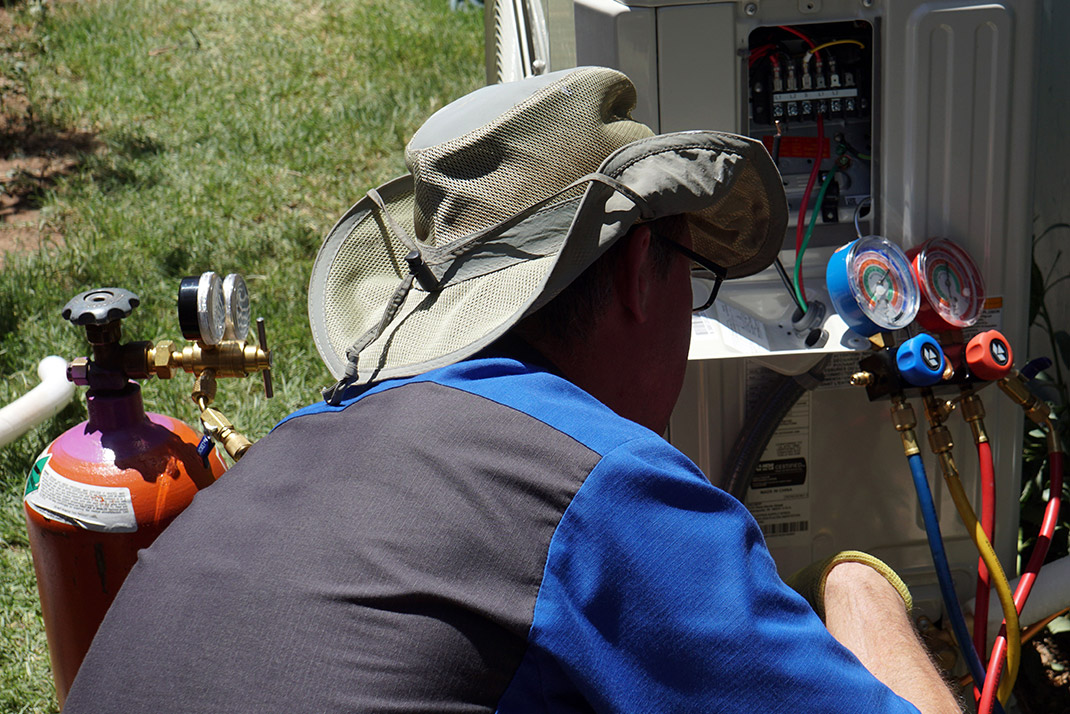
The 6-month refrigeration and HVAC training program is designed to train and prepare HVAC students for entry as service and maintenance technicians in jobs that utilize technologies employed in the fields of heating, ventilation, air conditioning and refrigeration (HVACR). Courses focus on the fundamentals of comfort systems and refrigeration.
- Day and evening classes available
- Offers program completion in just 6 months
- Incorporates real-world training with hands-on curriculum
Learn the Skills You Need in as little as 6 months!
- HVAC/R Service Technician
- HVAC/R Installation Technician
- Refrigeration Service Technician
- Refrigeration Installation Technician
- Low-Temperature Field Technician
- Restaurant & Retail Refrigeration Technician
- Commercial Refrigeration Technician
Employment is Expected to Grow for HVAC/R in the US by 40,100 Jobs by 2031!i
Flexible HVAC/R Class Schedules
HVAC/R class schedules range from morning, afternoon and evening, depending on the program and campus location. The Refrigeration School offers flexible schedules whether you are just graduating from high school, changing your career or transitioning from military to civilian life. We work hard to find the right program and the right schedule to help you succeed. Contact us for more information on upcoming class times and start dates for the Refrigeration Technologies training program.
Request More Info
-
 Take a Virtual Tour
Virtual Tour
Take a virtual tour of our campuses! Explore the classrooms, labs and shop floor with our unique interactive experience.
-
Employer Partnerships
RSI has partnerships with major employers across the United States and even internationally. Our dedicated Career Services team will be there to support you every step of the way after graduation.
-
The Right Tools for the Job
When you begin your education at RSI, we provide you with an extensive gear package. You get the high quality professional tools you need to succeed. Ask your admissions representative for more information about the gear package for your program.
-
 View Scholarship Info
Scholarship Opportunities
Learn more about what scholarship opportunities are available and how you might qualify for one. Start the process of applying for a scholarship today!
Are YOU ready to change your life? Listen to these RSI graduates who changed theirs.
We all come from different walks of life, and different circumstances, but it’s the hard work we do and the blood sweat and tears put in to make us who we are today.
The Refrigeration School gave these graduates the structure, confidence, and guidance they needed to make a difference in their lives. It only takes one decision to start the journey on a path towards a better career. A better Life.
Hear the stories of these RSI graduates and how they changed their life:
Michael Gabhart
From hitting rock bottom to owning his own business, Michael was able to take control of his life and be the hero his community needed. RSI was able to guide him on the path to success and give him a chance when no one else could. An HVAC/R Graduate at our Phoenix campus - Hear his story on how RSI changed his life.
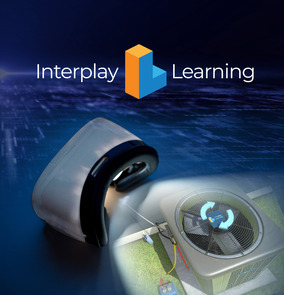
Students Get a Meta Quest 2 loaded with Access to Interplay Virtual Reality Training!
Train anywhere. Anytime.
Students of the Refrigeration Technologies Training program will have the Interplay Learning virtual reality training simulator available to enhance skills learned. Interplay simulates the experience of Electrical, HVAC training via VR to help students learn trouble-shooting techniques, even when they’re away from school. A Meta Quest 2 is part of the gear package for this program and Interplay Learning is included as part of the course materials for all students.
HVAC/R Program Courses
Fundamentals of Electricity
This HVAC/R class provides The Refrigeration School students with basic electrical understanding from an elemental stage through troubleshooting. Trainers are used to teach schematic wiring as well as test meter usage along with all the safety processes associated with handling electrical systems such as grounding and energized circuits. Students will work with dual voltage systems commonly found in HVAC/R equipment.
The foundation for control circuit wiring and high voltage wiring are discussed and students will put their knowledge to use while working with the trainers. The training material in this HVAC/R class includes information on multiple types of test meters and their proper use, electrical devices, control devices, and troubleshooting. A study of single phase and three phase motors round out the students’ understanding of basic electrical principles.
HVE100
- 4 Semester Credit Hours
- 90 Lecture Hours
- 10 Lab Hours
- 100 Total Contact Hours
- 14.5 Outside Prep Hours
Fundamentals of Refrigeration
In this HVAC/R class, The Refrigeration School students are introduced to the refrigeration cycle through class lecture and observing operating equipment. The material in this class is mechanical in nature and is limited to the mechanical and physical properties of refrigerants and the refrigeration cycle. The equipment in this class is used to safely demonstrate the varied states of refrigerant as it cycles through the system. The student will be introduced to many of the tools associated with the refrigeration industry such as: manifold gauge set, vacuum pumps, service wrenches, charging, and recovery equipment. The safety programs in this class will provide students with details on being in close proximity to rotating machinery and refrigerant handling. The class is also designed to familiarize the student with details on the mechanical troubleshooting process.
HVR100
- 4 Semester Credit Hours
- 90 Lecture Hours
- 10 Lab Hours
- 100 Total Contact Hours
- 8 Outside Prep Hours
Comfort Systems – Residential
This HVAC/R class offers experience with residential split systems, packaged heat pump systems, air conditioners, gas furnaces, and evaporative coolers. The Refrigeration School students are tasked with building schematics for air conditioning/heating systems and wiring the same systems having only the components of the system as reference. A further study of mechanical and electrical troubleshooting turns more hands-on in this class as students see the equipment come to life by their own hand. Gas piping, sizing, and installation are studied as it applies to furnace operation.
HVR110
- Prerequisite Course(s): HVE100, HVR100
- 4 Semester Credit Hours
- 60 Lecture Hours
- 40 Lab Hours
- 100 Total Contact Hours
- 6 Outside Prep Hours
Comfort Systems – Commercial
This HVAC/R class offers a more technical approach to studying the concepts of indoor climate control. The Refrigeration School students are tasked with safely removing and replacing components within residential and commercial HVAC systems such as fan motors, fans, electrical components, and compressors. Recovery and charging of refrigerants are an integral aspect of this class and students will apply their lessons to real equipment to round out the experience. Students will study brazing techniques using oxy/acetylene equipment and are required to put their knowledge to use on multiple tasks designed to enhance understanding of working within the confines of an HVAC unit. Refrigerant piping manipulation is introduced for study using hands-on techniques as students gain an overall familiarization of HVAC equipment. The opportunity to study and test on R410a and automotive air conditioning is provided in this class; successful students will achieve an R410a safety certification and EPA section 609 certification. An introduction to air balance and the associated equipment are also included for this class.
HVR120
- Prerequisite Course(s): HVE100, HVR100
- 4 Semester Credit Hours
- 60 Lecture Hours
- 40 Lab Hours
- 100 Total Contact Hours
- 20 Outside Prep Hours
Refrigeration Systems and Practices
Students will learn to maintain, monitor, and manage residential and commercial grade walk-in refrigerators and freezers. A study of commercial grade ice makers such as: a flaker, cuber, and nugget type units provide an intense look at low temperature refrigeration equipment. The Refrigeration School students will be required to change out a compressor, service and/or repair critically charged systems to enhance their overall understanding of mechanical and electrical troubleshooting. A variety of specialty tools related to equipment studied in this class will be introduced to round out the total experience.
HVR130
- Prerequisite Course(s): HVE100
- 4 Semester Credit Hours
- 60 Lecture Hours
- 40 Lab Hours
- 100 Total Contact Hours
Advanced Troubleshooting Techniques
The HVAC/R class introduces the operation and maintenance of reciprocating liquid chillers and stands as a review of the knowledge The Refrigeration School students have attained through previous courses. Electrical troubleshooting takes on a new intensity in this class as students are exposed to the E-STAR Trainer. The E-STAR Trainer is equipment developed by The Refrigeration School to teach and hone electrical troubleshooting skills. A thorough study of mechanical troubleshooting and schematic wiring will raise the student to the level of technician. The opportunity to qualify for EPA section 608 certification is provided during this class. The overall goal of this class is to ensure students have attained the required skills to be successful entry level HVAC/R technicians.
HVR200
- Prerequisite Course(s): HVE100
- 4 Semester Credit Hours
- 70 Lecture Hours
- 30 Lab Hours
- 100 Total Contact Hours
- 15 Outside Prep Hours
Sound Interesting? Contact us for more information on this course and the HVAC Training & Certification program below.
 Get Started